One evening a woman was driving home when she noticed a huge truck behind her that was driving uncomfortably close. She wanted to put some distance between herself and the truck, so she stepped on the gas. However, when she sped up, the truck did too. The faster she drove, the faster the truck went. She could not separate herself from the truck, so she became even more concerned.
At this point, she exited the highway, hoping that at last she would be free from the aggressive truck driver. But the truck followed her off the exit. Now the lady was getting scared. She turned up a main street, hoping to lose her pursuer in traffic. But the truck stayed right with her. At one point the trucker even ran a red light as he continued the chase.
Reaching a point of panic, the woman whipped her car into a convenience store parking lot and leaped out of her vehicle. She ran into the store screaming for help. The truck driver sprang from his vehicle too, but instead of coming after her, he ran toward her car. Yanking the back door open, the driver pulled out a man who was hiding in the back seat.
It turned out that the lady was running from the wrong man. She had no idea that a would-be rapist had hidden in her car and was waiting for an opportunity to do her harm. From his high vantage point, the truck driver had spotted the man and understood the danger that the woman was in. The purpose of the chase was not to harm the woman, but to save her, even at the risk of his own safety.
In the same way, many people run from God, fearing the harm that he might do to them. But God’s plans for us are not for evil; they are for our good. Jeremiah 29:11 says, “For I know the plans I have for you,” declares the Lord, “plans to prosper you and not to harm you, plans to give you hope and a future.”
God only wants the best for us. He wants to rescue us from the hidden dangers of sin. So, he pursues us, no matter what it costs him. And it cost him the life of his son Jesus, who died on the cross to rescue us from our sins!
“I’m not a hero. I’m just a man who constantly does heroic things.”—Dan Fielding of Night Court.
Like Mac Davis used to sing, “It’s hard to be humble.” Even though we all have many reasons to remain humble, our sinful human nature tempts us to think more of ourselves than we should. The Bible often warns us of the sin of pride. Pride can lead to many other sins, and it has been the downfall of many people. We would do well to pursue an attitude of humility. The goal is not to think less of yourself, but to think of yourself less. That will give you more time to think about God and others.
“Pride goes before destruction, a haughty spirit before a fall.”—Proverbs 16:18.
“Humble yourselves before the Lord, and he will lift you up.”—James 4:10.
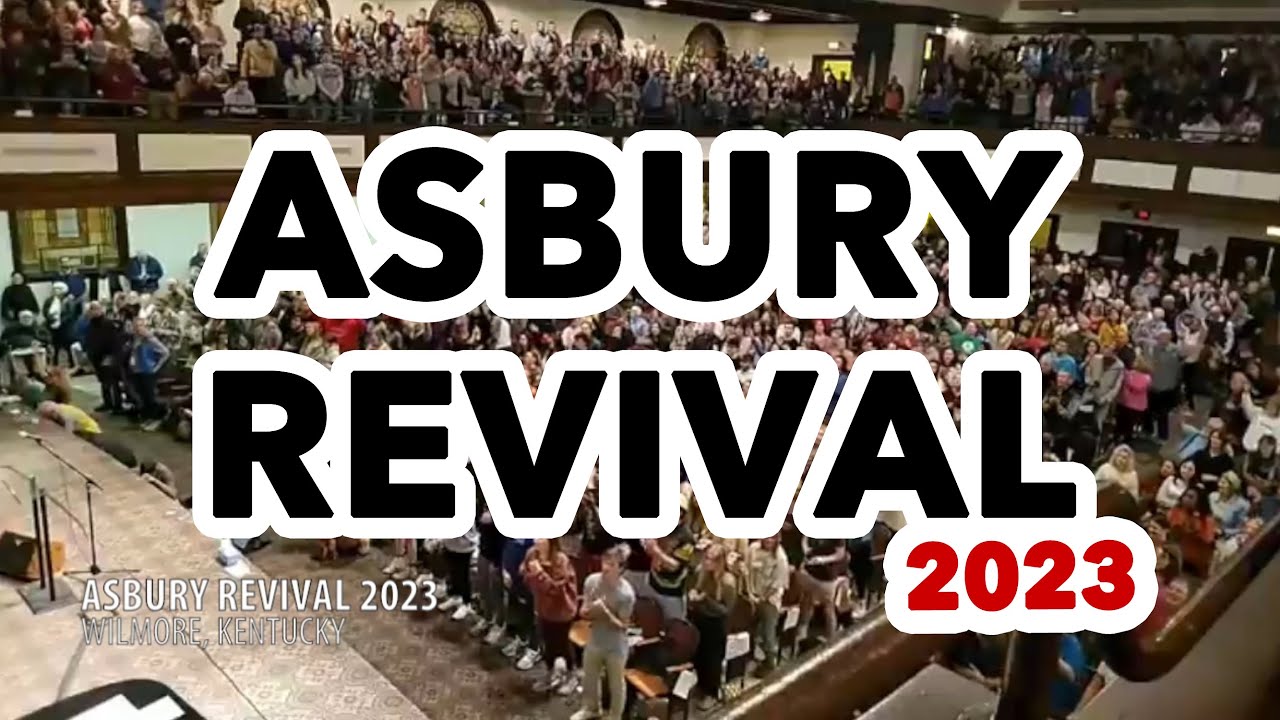
Revival has apparently broken out at Asbury University in Wilmore, Kentucky. It is reported that other Christian campuses across the nation are experiencing the same thing, on-going worship services that are unscripted and filled with singing, prayers and repentance. Many people have travelled long distances to witness for themselves the event occurring at Asbury.
Some Christians are quick to jump on the bandwagon when something exciting happens. Others have more of a “let’s wait and see” attitude. No matter which camp you belong to, I believe we can gain some insight from a Pharisee named Gamaliel. When the Jewish leaders felt threatened by the newly-founded church, Gamaliel reminded them of other recent religious movements, all of which came to nothing. Then he said of the apostles, “Therefore, in the present case I advise you: Leave these men alone! Let them go! For if their purpose or activity is of human origin, it will fail. But if it is from God, you will not be able to stop these men; you will only find yourselves fighting against God.” (Acts 5:38-39).
Please join me in praying that this revival will spread like wildfire! God knows we need it!
I was working outside my house recently when I found an empty container for a smokeless tobacco product. The container had these words—“WARNING: This product can cause gum disease and tooth loss.”
My first thought was, “Hmmm. They left out the part about the cancer.” You would think that would be an important part of the warning, but they chose to focus on other potential hazards rather than the most serious one.
I think this is the same approach we take with sin. We take note of the fact that there may be some repercussions if we choose to disobey God. If we steal something we might get caught. If we drink and drive we might cause an accident. If we engage in sexual immorality we might get an STD, experience an unwanted pregnancy or suffer a broken relationship. If we lie we might be found out.
However, there is a more serious consequence for unforgiven sin—we might go to hell! The Bible often warns us of the dreadful wrath of God that awaits those who choose a life of sin. But thankfully there is forgiveness offered to all who accept Jesus as their Lord and Savior!
“Just as people are destined to die once, and after that to face judgment, so Christ was sacrificed once to take away the sins of many; and he will appear a second time, not to bear sin, but to bring salvation to those who are waiting for him.”—Hebrews 9:27-28.
In his 1996 book “Slouching Towards Gomorrah”, Robert Bork lamented the state of decline that he perceived in the culture of the United States and Western civilization. He blamed the decline on modern liberalism and the rise of the new left.
Since Bork’s important book, we have seen the culture continue to decline. On June 26, 2015, the U.S. Supreme Court ruled that same-sex couples have a constitutional right to marry. Of course we Christians understand that God has defined marriage as a union of a man and a woman (Gen.2:24), a definition that Jesus confirmed (Mark 10:6-9).
Since that court decision, many same-sex couples have entered into relationships that they call marriage. The left-leaning media have pushed the homosexual agenda in an effort to normalize same-sex behavior in our culture. Many in the sports world and the entertainment industry have joined in the effort to sway the public opinion. We are urged not only to accept, but to celebrate, that which God has deemed unacceptable.
These efforts seem to be working. Polls show that more Americans are willing to accept lifestyles which God has forbidden. It is not a coincidence that this shift in thinking corresponds with a noticeable decline in church attendance and Bible reading, and an increase in the number of people who do not consider themselves to be affiliated with any religion at all.
Even some people who claim to follow Christ have shown themselves to be slouching towards Gomorrah. They have bought into the worldly view that tolerance is the highest virtue. Well, there are some things that God doesn’t tolerate, and God’s children should share his plain-spoken stance on these matters. I know of a couple of congregations in my area who have broken away from their liberal denomination because it has accepted and affirmed the homosexual lifestyle.
The pace of our culture’s slouching seems to be increasing in speed. On Dec.13, 2022, President Joe Biden signed into law the “Respect for Marriage Act”. This new law requires that the marriages of same-sex and interracial couples must now be recognized by the federal government. The law also requires that states do the same.
Have you noticed how the homosexual agenda has tried to align itself with the civil rights movement? To say that someone’s chosen homosexual behavior is somehow equivalent to another person’s ethnic identity is simply ludicrous! One African-American preacher responded to this idea by saying, “Don’t spit in my face and tell me it’s raining!”
If someone were to write a follow-up book to Bork’s work, it might be entitled, “Sprinting Towards Sodom”. The continuing decline in the moral fiber of our society should be cause for alarm. Someone once speculated that perhaps Sodom and Gomorrah were not destroyed because of homosexual behavior, but because they had deemed it normal. This seems to be the status of our culture today.
Let’s make sure that we continue to shine God’s light in this ever-darkening world in which we live. Let’s take a stand on biblical principles and let’s speak the truth in love. It may be too late to save our culture, but perhaps we can save someone we love!
Jude, the half-brother of Jesus, wrote a message to the Christians in the first century. He had hoped to be able to celebrate the salvation that they shared. However, he felt compelled to urge them to contend for the faith that was once for all entrusted to God’s holy people (v.3).
What is this faith to which he refers? It is the belief in the gospel message that Jesus Christ, God in the flesh, had come to save all mankind. He made this possible by his atoning death on the cross, and Jesus rose from the dead on the third day so that anyone who would put their full trust in this crucified and resurrected Jesus would be saved from their sins and given the free gift of eternal life. Everyone who accepted this message repented of their sins, were baptized into Christ and God added them to the church.
Those who follow Jesus must hold fast to this belief. However, Jude was concerned that many people were not contending for the faith. So he wrote them this message of encouragement and exhortation.
Many Christians today need a reminder that they are supposed to be contending for the faith. So many professing believers look like anything but contenders. Can you really be serious about your faith if you miss church on Sunday morning for little or no reason? If you are not giving a significant amount of your income to the Lord’s work, can you really say that you are invested in the kingdom of God? Are you reading the Bible and praying daily? Are you using your spiritual gift to build up the church? Are you involved in the Lord’s work in some specific, tangible way? When is the last time you spoke of your faith or invited someone to church? It seems that there are many ways in which professing believers are showing themselves to be anything but contenders for the faith.
The concern that Jude had about Christians failing to contend for the faith was that they had allowed ungodly people to slip into the church and teach that Christianity gives you a license to be immoral. He says that by doing so these teachers were perverting the grace of God and denying Jesus Christ (v.4). He goes on to remind the readers about how Sodom and Gomorrah gave themselves up to sexual immorality and perversion and points out that they are an example of those who suffer the punishment of eternal fire (v.7).
What was true in the first century is still true today—God does not permit sex outside of marriage. Indonesia’s parliament recently voted to ban sex outside of marriage. I wonder if they realized that God had already done that!? Satan has become quite adept at deceiving people with his lies about sexual conduct. Therefore, we have to speak the truth about the matter. Christians have only two options concerning sexual behavior. They must choose to be faithful in marriage, or to be abstinent outside of marriage. That’s it. There are no other options. Those who violate this moral law must repent or pay the penalty. The Bible clearly says that those who live a sexually immoral lifestyle are not a part of God’s kingdom (1 Cor.6:9-11) and will not be allowed to enter God’s heaven (Rev.22:15). Even those who serve as enablers to sexually immoral people run the risk of experiencing God’s wrath (Rom.1:32).
So, are you contending for the faith? Jude has some advice for us in the last part of his message. Remember what Jesus and his apostles said about those who live ungodly lives (v.17). Build yourselves up in your faith and pray (v.20). Keep yourself in God’s love with your obedience (v.21). Finally, try to save others who are engaged in ungodly behavior (vv.22-23).
I write this on Friday, January 20, the day of the annual March for Life in Washington, D.C. Thousands of people will gather there to celebrate the sanctity of life. Some call them “foes of abortion”, “opponents of abortion rights”, “anti-abortion activists” and other negative terms to try to portray them being on the wrong side of this important moral issue. I call them heroes of the faith.
The Ten Commandments forbid taking an innocent human life (Exodus 20:13). Psalm 139:13 says, “For you created my inmost being; you knit me together in my mother’s womb.” Jeremiah 1:5 teaches us that God not only forms us in the womb, but that he has plans for our lives even before we are born. There are other Scriptures that deal with the sanctity of life, but these are all we need in order to know God’s position on the issue.
This Sunday, January 22, 2023, marks the 50th anniversary of Roe vs. Wade, the Supreme Court decision that essentially legalized abortion on demand in the United States. Since then, over 64 million babies have been aborted. What a tragedy! What a cruel and blatant disregard for the value of human life!
This Sunday has also been designated as “Sanctity of Life Sunday”. Christians and churches all across America will take time to celebrate the sanctity of life. Followers of Christ will be encouraged to pray and to act in ways that will promote the value of life.
We have seen what happens in a nation that devalues life. Child abuse happens frequently. Mass shootings become commonplace. The elderly are mistreated and neglected. Domestic violence happens more and more often. Violent crime escalates. Surely you have connected the dots by now! Vicious attacks on innocent people are directly related to the value—or lack thereof—that our society has placed on the life of a human being.
Science tells us that every baby that is aborted already has a heartbeat. Common sense should tell us that abortion stops a beating human heart. We have already looked at what God has said about the matter. When science, common sense and the Word of God come together, abortion becomes unthinkable!
Still the debate rages on, with people on both sides of the issue showing themselves to be zealous for their cause. The Supreme Court overturned Roe vs. Wade last year, a decision that gives the states the right to set the laws concerning abortion. Hopefully this will set us on a path towards becoming a kinder and gentler nation.
How should we Christians proceed in our efforts to promote the sanctity of life? Here are a few suggestions.
First, we need to be familiar with what the Bible says on the issue. We have to know God’s truth in order to combat Satan’s lies. When you know the truth, the truth will set you free—free to understand what’s right and free to act in ways that will promote the cause of righteousness.
Second, we need to speak up for the unborn who cannot yet speak for themselves. Don’t avoid a conversation about abortion. Speak the truth with love.
Third, vote pro-life. Your vote does matter. We can make a difference at the polls. Those who accuse us of being political should be informed that this is a matter of righteousness. And those who claim to follow Christ, yet maintain that this is a political matter should be encouraged to take their “Jesus” out of the little box they keep him in and let him truly be the Lord of their lives.
Next, we need to offer grace to anyone who is truly repentant for any sin that they have committed concerning abortion. Whether they have had an abortion themselves, or have driven someone to an abortion clinic, or paid for someone else to have an abortion, or have spoken in favor of abortion or have unknowingly supported abortion with their uninformed vote, there is forgiveness available. The precious blood of Jesus is powerful enough to wipe away any sin.
Finally, let’s keep praying about the matter. Pray that God will change the hearts and minds of people so that abortion will be seen for the evil that it is, and that the sanctity of life will be understood for what it is—a wonderful gift from God!
I have always wondered why some churches will invite politicians who have obviously not been called to preach to speak in their congregations during a Sunday worship service. You would think that the members of the church would deserve better. Perhaps it is the allure of having someone who is well-known to grace them with their presence and deliver a message, no matter how inadequate or inappropriate that message may be.
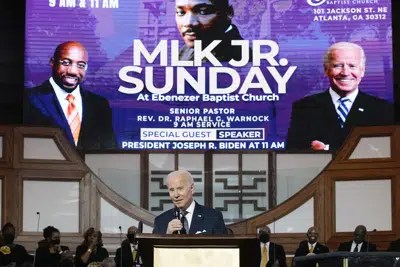
Yesterday, President Joe Biden delivered the Sunday morning sermon at Ebenezer Baptist Church, where Dr. Martin Luther King, Jr. once preached. With all due respect, I don’t think that President Biden is qualified to preach at a Bible-believing church. He has anger issues. The president has trouble telling the truth. He regularly uses the names of God and Jesus as swear words. Mr. Biden is a champion of abortion and celebrates same-sex “marriage”.
These sins would prevent any discerning Bible-believing church from giving Mr. Biden a platform to speak. It seems that some churches are so star-struck that they don’t even consider the lack of character in the celebrity that they invite to come and speak for them.
We can do better than that. We should do better than that.
“For the time will come when people will not put up with sound doctrine. Instead, to suit their own desires, they will gather around them a great number of teachers to say what their itching ears want to hear.”—2 Timothy 4:3.
(I got the outline for this article from an exhibit at the Creation Museum in northern Kentucky.)
The history recorded in the Bible is under attack by our society. As a result, many people now view the Bible as a book that contains many interesting stories and religious teachings, but has no relevance for us today. This is not true. The Bible gives us the truth about our existence. There are seven words that describe how God has engaged with mankind throughout human history. These words all begin with the letter “C”.
The first word is “Creation”. “In the beginning God created the heavens and the earth.” If you can believe the first verse of the Bible, then you can believe the rest of it. Attempts to explain the creation without a Creator have proven to be woefully inadequate. Molecules-to-man evolution is nothing more than a fairy tale for grownups. It all starts with God.
The second word is “Corruption”. God created everything good, but mankind succumbed to temptation and disobeyed God, thus bringing a curse on the earth. Sin ushered sickness, sorrow and death into God’s once perfect creation. We now live in a world filled with pain, strife and turmoil.
“Catastrophe” is the next word to consider. Mankind became so wicked that evil filled the earth. Only Noah and his family were found to be righteous. So God destroyed the rest of humanity with a great flood and started over with the few people who were saved on the ark that Noah built.
The fourth word among the seven “Cs” is “Confusion”. After the flood, God commanded humanity to spread out all over the earth. Instead, they chose to build a tower to the sky and make a name for themselves. So God confused their language, and they were forced to scatter in confusion.
The next word to examine is “Christ”. Because we have all disobeyed God, we are all sinners in need of a savior. And God did not leave his precious creation without hope! He sent his only Son Jesus to seek and to save the lost!
The sixth word goes along with the previous one—“Cross”. The way that Jesus would save us from our sins would be to pay the price for them by offering his own life as a ransom. Jesus willingly went to the cross to suffer and die so that we could be forgiven and accepted into the family of God; lost no more, but saved!
The seventh and final word in human history is “Consummation”. This is the only one that has not yet taken place. It refers to the Second Coming of Jesus, when God’s plan to save the world will finally come to fruition. Jesus will return to conquer evil and claim his own. God will usher in eternity, creating a new heaven and a new earth where there will be no more death, sorrow, crying or pain! I believe that the next great event on God’s calendar is the Second Coming of Jesus. It could happen any day now! Therefore, we must watch and pray as we wait for the final act of history to unfold—the triumphant return of the King of kings and the Lord of Lords—Jesus Christ!
In Mark 6 we read about the time when Jesus walked on water. His disciples were in a boat, straining at the oars, when they saw him walking on the lake. Thinking they saw a ghost, they were terrified and they cried out.
Verse 50 says, “…Immediately he spoke to them and said, ‘Take courage! It is I. Don’t be afraid.’”
Jesus didn’t want them to continue to be terrified, so he spoke out immediately. In exhorting them to be brave, he made two short statements–one in the positive, the other in the negative—that basically said the same thing. First, they should take courage. Second, they shouldn’t be afraid. The Bible, Old Testament and New, often urges us to put aside our fears and act courageously.
How do we do this? I think the key is that short, but important, sentence in between the two statements on bravery—“It is I.”
When we realize that Jesus is in our midst, fear quickly dissipates and courage springs forth! Any time you feel scared, put your trust in Jesus. He is the key to being brave.








 Jesustrek