Charles Spurgeon shared the story of an old farmer who told about his encounter with the devil. The devil was tempting him and he finally said to the devil, “What do you want from me anyway?”
The devil answered, “Why, I want your soul!”
To this the man responded, “I have entrusted my soul to Christ. You will have to see him about this matter.”
“Praise be to the God and Father of our Lord Jesus Christ! In his great mercy he has given us new birth into a living hope through the resurrection of Jesus Christ from the dead, and into an inheritance that can never perish, spoil or fade. This inheritance is kept in heaven for you, who through faith are shielded by God’s power until the coming of the salvation that is ready to be revealed in the last time.”—1 Peter 1:3-5.
The children in a prominent family decided to give their father a book of the family’s history for a birthday present. They commissioned a professional biographer to do the work, carefully warning him about the family’s “black sheep” problem: Uncle George had been convicted of murder and was executed in the electric chair at the state penitentiary. The biographer assured the children that he could smooth over the situation to their satisfaction. Sure enough, when the book came out, it said that “Uncle George occupied a chair of applied electronics at an important government institution. He was attached to his position by the strongest of ties and his death came as a real shock.”
There is no need to whitewash our family history and pretend that we have it all together. The Bible says that we all sin and fall short of the glory of God (Rom.3:23). We all are sinners in need of a savior. And we thank God that he sent us a Savior—His one and only Son, Jesus!
Opera star Mary Garden, considered one of the greats of her profession, said there was one thing she always told herself before going on stage: “There’s one person in that vast audience who has made a sacrifice to come and hear me, and for that person I’m going to give my very best.”
There is a biblical principle that states that all of us—even those who are not famous opera stars—should strive for excellence in whatever it is that we try to do.
Eccl.9:10a says, “Whatever your hand finds to do, do it with all your might…”. Col.3:23-24 says, “Whatever you do, work at it with all your heart, as working for the Lord, not for human masters, since you know that you will receive an inheritance from the Lord as a reward. It is the Lord Christ you are serving.”
Always remember that the Lord is in the audience, and the Lord deserves your very best.
1 John begins with the apostle John affirming that he and the other apostles had indeed seen, heard and even touched Jesus when he walked the earth. This first-hand witness proclaimed what he had experienced so that others could have fellowship with Jesus also.
John goes on to urge his readers to walk in the light rather than in the darkness. Those who live in sin do not live in the truth. But if we walk in the light, the blood of Jesus purifies us from all sin.
This doesn’t mean that we can be perfect. As 1:8-10 says, “If we claim to be without sin, we deceive ourselves and the truth is not in us. If we confess our sins, he is faithful and just and will forgive us our sins and purify us from all unrighteousness. If we claim we have not sinned, we make him out to be a liar and his word is not in us.”
Some people have mistakenly believed that God’s grace is essentially a license to sin. “If our sins are forgiven”, they might say, “then we must be able to live any way we choose.” Paul the apostle often had to deal with this dangerously wrong mindset in his letters. In Rom.6:1-2 he writes, “What shall we say, then? Shall we go on sinning so that grace may increase? By no means!…”
So that no one would seek to cheapen God’s grace in such a way, John continues in 1 John 2:1-2, “My dear children, I write this to you so that you will not sin. But if anybody does sin, we have an advocate with the Father—Jesus Christ, the Righteous One. He is the atoning sacrifice for our sins, and not only for ours but also for the sins of the whole world.”
Rather than use God’s amazing grace as a license to sin, we should strive to live holy lives. Christians aren’t sinless, but we should sin less and less as we mature in our faith. However, when we do sin, the blood of Jesus is our atoning sacrifice, and he is our advocate before God.
You might picture this as a criminal trial. One day you will stand before God to answer for your sins. Satan will be the prosecuting attorney, accusing you of every single thing you have ever done wrong. However, Jesus is our defense attorney. He not only defends us before God, Jesus has already paid the price for our sins by dying a sacrificial death on the cross. The following poem might correctly describe this event as it plays out on Judgment Day:
“I hear the accuser roar
Of sins that I have done.
I know them well, and thousands more
Jehovah findeth none.
Still the restless foe accuses
Sins recounting like a flood.
Every charge our God refuses!
Christ has answered with his blood!”—Unknown author
A missionary was struggling to translate the Bible for a tribe that did not have the Word of God in their own native language. He found it particularly difficult to find a way to convey the concept of “pride”. He finally realized that there was an idea in that culture that some people’s ears were too far apart. So he used the concept of an inflated head to convey the idea of pride.
In the Bible, pride itself is considered a deadly sin, and it has the potential to lead us to commit many other sins. Therefore, we must constantly strive to humble ourselves so that we don’t go through life with our ears too far apart.
“Pride goes before destruction, a haughty spirit before a fall.”—Proverbs 16:18.
“Humble yourselves before the Lord, and he will lift you up.”—James 4:10.
A young girl was once asked how she was able to sell a record number of Girl Scout cookies. She answered, “You have to look people in the eye and make them feel guilty.”
Sometimes we can manipulate people by making them feel guilty or ashamed. This, of course, is unethical. However, there are times when making people feel ashamed is actually a good thing. 2 Thess.3:14 says, “Take special note of anyone who does not obey our instruction in this letter. Do not associate with them, in order that they may feel ashamed.” When someone is caught up in a serious sin, sometimes the first step in restoring them is to make them understand that they are guilty. Their feelings of shame lead them to repentance. Think about some of the times in your life when you have had to make a change in your behavior. Did it not come after you experienced some shame about things that you had said or done?
We live in some dangerous times, times in which we are told that shame is always a bad thing and that people should never be made to feel ashamed for any reason. This goes against common sense and Scripture.
Let’s be extremely cautious about how we use this biblical principle! But let’s not underestimate the way that God uses shame to bring people back to Him.
“Godly sorrow brings repentance that leads to salvation and leaves no regret, but worldly sorrow brings death. See what this godly sorrow has produced in you: what earnestness, what eagerness to clear yourselves, what indignation, what alarm, what longing, what concern, what readiness to see justice done. At every point you have proved yourselves to be innocent in this matter.”—2 Cor.7:10-11.
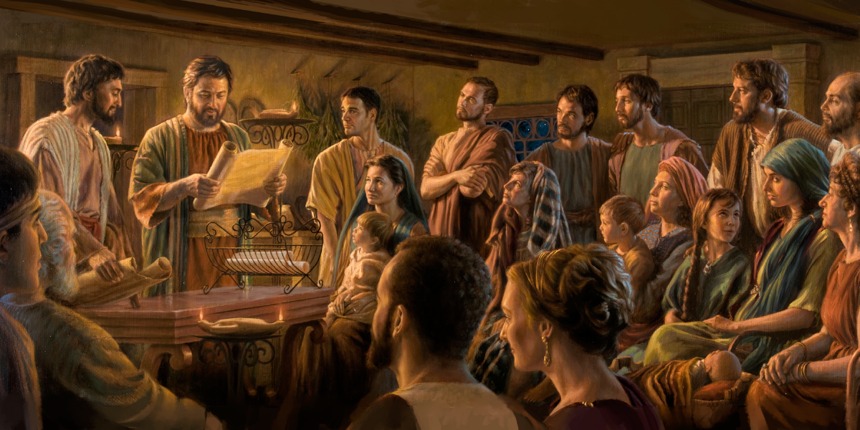
Acts 2 records that the Holy Spirit filled the apostles on the day of Pentecost and enabled them to speak the word of God in such a way that everyone could understand in their own native language. Peter explained to the crowd why this had happened and preached the gospel message, exhorting whoever believed in the death and resurrection of Jesus to repent and be baptized so that their sins would be forgiven and so that they would receive the gift of the Holy Spirit (v.38). V.41 says, “Those who accepted his message were baptized, and about three thousand were added to their number that day.”
Thus the church was born, and those who were added to it continued to meet together on a regular basis for fellowship and worship. Acts 2:42 is a key verse for understanding life in the early church—“They devoted themselves to the apostles’ teaching and to fellowship, to the breaking of bread and to prayer.” Let’s take a closer look at the devotion of these believers.
First, they devoted themselves to the apostles’ teaching. They paid close attention to the words of the men who had been chosen by Jesus to be his closest disciples. The apostles taught the word of God. They explained how the Old Testament had pointed to Jesus, and that Jesus had perfectly fulfilled the prophecies of the Messiah who was to come into the world. In addition to this, they no doubt shared the teachings that Jesus had uttered during his ministry on earth.
Secondly, they devoted themselves to fellowship. They shared their lives together. They met in each other’s homes. They took care of one another’s needs to the extent that they gave generously so that the poor among them would have all of life’s necessities. They leaned on each other for support and encouraged one another in times of trouble.
Third, they devoted themselves to the breaking of bread. Most scholars agree that this is a term Luke used for communion, also called the Lord’s Supper. Jesus had instituted this ceremony to help his followers remember the sacrifice that he made on the cross to pay for the sins of the world. Every time they ate the broken bread and drank from the cup, it reminded them of the broken body of Jesus on the cross and the precious blood that he shed for the forgiveness of our sins. According to Luke, the historian of the early church, Christians came together every Sunday to devote themselves to taking communion together (Acts 20:7).
Finally, they devoted themselves to prayer. Someone once said that the early church did not think that prayer was a good thing; they thought that prayer was the only thing! Prayer was the passion of believers in the first century. They took seriously the admonition to “pray continually” (1 Thess.5:17). They had some moving prayer meetings. Acts 4:31 says, “After they prayed, the place where they were meeting was shaken…” As they devoted themselves to prayer, the God of heaven moved, and his kingdom grew in leaps and bounds.
Now it’s time to consider our own level of devotion. Do you spend significant time reading the word of God and then doing what it says? Are you really involved in the lives of your brothers and sisters in Christ? Do you faithfully participate in the Lord’s Supper on a regular basis? How important is it to you to pray? These are serious questions for us to consider. Let’s strive to deepen the level of our own devotion to Jesus Christ and the church that he purchased with his precious blood!
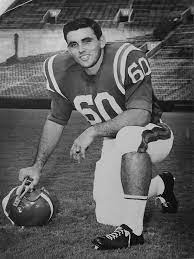
In the early 1960s the University of Florida football team was running wind sprints for conditioning. One of the large linemen, Jack Katz, who played tackle, had proven himself to be the fastest lineman on the team. Katz walked up to coach Ray Graves and asked if he might run sprints with the faster backs. Permission was granted.
For the next several days Katz managed to finish last in every race with the backfield runners. Nobody was surprised. The coach asked if he wouldn’t rather be a winner with the linemen than a loser in the competition with the backs.
Katz responded, ”I’m not out here to outrun the linemen. I already know I can do that. I’m here to learn how to run faster; and if you’ve noticed, I’m losing by a little less every day.”
We all should be so diligent in trying to improve ourselves.
“Be diligent in these matters; give yourself wholly to them, so that everyone may see your progress.” —1 Timothy 4:15.
Graduations are usually a time of exuberant celebration, as those being awarded their hard-earned degrees joyfully acknowledge their accomplishments and look toward the future with high hopes and expectations.
But the 2020 and 2021 graduates of Wilberforce University had even more reason to celebrate at the commencement ceremony this past spring. The school, a university affiliated with the African Methodist Episcopal Church, gave their students an additional cause to be joyful. Officials at Wilberforce decided to forgive any debt that these students had incurred to the university.
The president of Wilberforce, Eldred Anthony Pinkard, announced, “Because you have shown that you are capable of doing work under difficult circumstances, because you represent the best of your generation, we wish to give you a fresh start. So therefore the Wilberforce University board of trustees has authorized me to forgive any debt. Your accounts have been cleared and you don’t owe Wilberforce anything. Congratulations.”
To say that the news was well-received by the students would be a huge understatement. The president’s announcement was interrupted by screaming, shouting and jumping. The smiling and laughing Pinkard had to pause before continuing his announcement. When he finished there were more cheers, screams and jumps from the jubilant students. They were extremely appreciative to receive this unexpected and generous gift.
This reminds us of the grace and mercy that God has shown us through his son Jesus Christ. Unlike the students who were deemed worthy of such an honor, we are all sinners who have fallen short of the glory of God. We in no way earned the salvation that we are freely offered, nor do we deserve such a great blessing. No, it is a matter of God’s grace. He loved this sinful world, and every single sinner in it, so much that he sent his one and only son Jesus to die on a cross to pay for the sins of the world. For anyone who receives Jesus as their Lord and Savior, their debt of sin is paid; it is forgiven.
Just as President Pinkard made the announcement that the students’ debt had been cancelled, God has announced that our debt has been forgiven if only we will accept Christ and live for him. The Bible over and over makes the announcement of the news that is so good that it is difficult for many people to believe. But it’s true! Jesus has paid the debt we owed. We only need to accept his grace and respond to him in faith that is demonstrated through repentance, confession and baptism.
And just like the forgiven students responded with shouts and cheers, it is only natural that we Christians who have been forgiven respond with our exuberant worship and joyful obedience. Those who are saved joyfully and thankfully serve and praise the One who would rather die in our place than live without us in heaven!
“In him we have redemption through his blood, the forgiveness of sins, in accordance with the riches of God’s grace that he lavished on us…”—Ephesians 1:7-8.
A huge crowd lined the streets, enthusiastically cheering the marching soldiers in uniform who were about to ship out overseas. A young recruit, who had watched the crowd for some time, turned to the veteran next to him and asked, “Who are all those people cheering?” The seasoned soldier replied, “They are the ones who are not going.”
Christ went to the cross so that we would not have to pay the price for our sins. He paid the price for us. The only proper response is to gather together and cheer him. In a sense, that is what we Christians do when we gather each Sunday and celebrate communion.
“He is the atoning sacrifice for our sins, and not only for ours but also for the sins of the whole world.”—1 John 2:2.