Standing on Holy Ground

The life of Moses is divided up into three parts. The first forty years he spent growing up in Pharoah’s household and enjoying all the privileges that lifestyle provided. The next forty years he spent tending sheep in Midian, which was quite a lifestyle change! The last third of his life Moses spent leading the Israelites out of captivity and into the Promised Land. Someone once reasoned that the lesson we can learn from his life is this—You had better take care of yourself, because when you are eighty years old, God might ask you to do something big!

Let’s examine God’s call to Moses that is recorded in Exodus 3, and see if there are some things we can learn about God’s call on our lives.

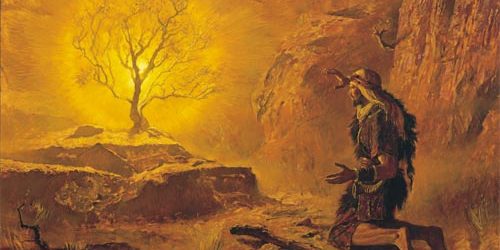
The Lord famously appeared to Moses in a burning bush. Moses noticed the strange sight of a bush that was burning, yet did not burn up. When Moses approached the bush, God called him by name, and Moses responded, “Here I am.” Then God warned Moses not to come any closer, and that he should take off his sandals, “…for the place where you are standing is holy ground.” (Ex.3:5). Moses promptly hid his face out of fear. God then explained that he had seen the misery of his people who were in bondage in Egypt, and that he was sending Moses to bring his people out of Egypt and lead them to Canaan. Moses responded “Who am I?” to undertake so great an endeavor. God met his reluctance with the promise that he would be with Moses. And we all know how the story ends.

From this episode in Moses’ life, we might find some similarities in how God interacts with people today.

First, I think we all agree that God wants to get our attention. It probably won’t be as dramatic as a burning bush, but God makes himself known to people in various ways, and we would do well to look for his presence in the events of our lives. He might be trying to get our attention through the circumstances around us or through the people he brings into our lives. We would do well to seek his presence wherever we may sense that it is being displayed.

Notice that God spoke the name of Moses. God knows us intimately, and he wants to communicate with us personally through his word. Just as Moses answered, “Here I am”, we too should be willing to answer the call of God when it comes.

This is when God pointed out to Moses that he was standing on holy ground, and Moses responded appropriately with fear and reverence. We must never take lightly being in the presence of the Almighty God!

Then God revealed his concern for his people. God is not distant and unconcerned about the problems of those he loves. He reminds us constantly of his attachment to those who are his own, and he promises to respond to their needs. Scripture also reminds us that we must be aware of the needs of God’s people and do whatever is in our power to take care of those needs.

God proceeded to give Moses a job to do. It was such an intimidating task that Moses began to make excuses. But God told Moses that he would be with him. In the same way, God has something important for each Christian to do. Your assignment might seem overwhelming, causing you to hesitate and make excuses. However, God promises his presence and his power to encourage us and enable us to perform any task, no matter how daunting, that he calls us to do.

To sum it all up: we must seek God’s presence, answer his call and serve in his power, knowing all along that we are standing on holy ground!


Posted in Christian Living, Leadership | Tagged , , , , , , | Leave a comment

Diplomatic

A knight was once called into the presence of the king to give an account of his recent activities. The knight reported, “I have been looting and pillaging among your enemies to the east, your majesty.” The king replied, “But I don’t have any enemies to the east!” The knight paused for a moment and then answered, “Well, you do now!”

As representatives of God’s kingdom, we need to show some diplomacy. I am not saying that we must get along with everyone. God has many enemies in this world, and we don’t need to try to appease any of them. However, we must be careful that we don’t needlessly create enemies with our careless words or actions.

“Be wise in the way you act toward outsiders; make the most of every opportunity. Let your conversation be always full of grace, seasoned with salt, so that you may know how to answer everyone.”—Colossians 4:5-6.

Posted in Christian Living, Humor, Leadership | Tagged , , , , , , | Leave a comment

Take Time

Take time to live: it is the secret of success.

Take time to think: it is the source of power.

Take time to play: it is the secret of youth.

Take time to read: it is the fount of knowledge.

Take time for friendship: it is the source of happiness.

Take time to dream: it hitches the soul to the stars.

Take time for God: it is life’s only lasting investment.

                                –Unknown

“There is a time for everything, and a season for every activity under the heavens.”—Ecclesiastes 3:1.

“Teach us to number our days, that we may gain a heart of wisdom.”—Psalm 90:12.

Let’s make sure we take time for the things that are most important, today and every day.

Posted in Christian Living, Communion Meditations, Leadership | Tagged , , , , , | Leave a comment

A Better View of Jesus

I was about 10 years old when I discovered that I could not see nearly as well as my classmates at school. It had gotten to the point where it was affecting my schoolwork. So my parents took me to get an eye exam and some eyeglasses. I remember that on the ride home after getting my new glasses I read out loud every road sign, simply because I could see them now. The improved vision also allowed me to be able to hit a baseball, something that made the sport immensely more enjoyable!

Life is so much better when we can see clearly. Good vision allows us to avoid a lot of problems. In the same way, we have to have a clear view of Jesus in order to have a good spiritual life. If our view of Jesus is distorted in any way, we will have all kinds of problems. That’s why Scripture tells us to give close consideration to Jesus—who he is, what he teaches and how he shows us to live. Colossians 3:1-2 says, “Since, then, you have been raised with Christ, set your hearts on things above, where Christ is, seated at the right hand of God. Set your minds on things above, not on earthly things.”

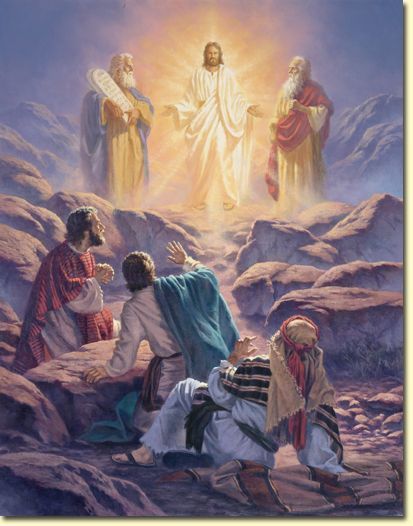
Jesus wanted his disciples to see him for who he was is. So he took three of them—Peter, James and John—up on a mountain with him. There he was transfigured before them and his face shone like the sun and his clothes became as brilliantly white as the light. Moses and Elijah appeared before them and talked with Jesus. Then “…a bright cloud covered them, and a voice from the cloud said, ‘This is my Son, whom I love; with him I am well pleased. Listen to him!” (Matthew 17:5).

It is important that we listen to Moses and Elijah, who in this case represent the law and the prophets. However, it is absolutely critical that we listen to Jesus, because he is the one who fulfills the law and the prophets. We can’t understand the full meaning of the Word of God unless we see it as it is fulfilled and interpreted through Jesus. The Lord wanted his disciples to understand the importance of having a clear view of who Jesus is. As the Lord’s disciples today, we also need to have this understanding. The better we see Jesus, the better we understand how to live for God. Therefore, we need to continually read the Bible to see how Jesus lived and to know what he taught. We must read and study Scripture, meditate on it and then put it into practice in our lives. The better view we have of Jesus, the better we can live for him.

Hebrews 12:1-3 says, “Therefore, since we are surrounded by such a great cloud of witnesses, let us throw off everything that hinders and the sin that so easily entangles. And let us run with perseverance the race marked out for us, fixing our eyes on Jesus, the pioneer and perfecter of faith. For the joy set before him he endured the cross, scorning its shame, and sat down at the right hand of the throne of God. Consider him who endured such opposition from sinners, so that you will not grow weary and lose heart.”

So, it is clear that we need to fix our eyes on Jesus and continually strive to get a better view of who he is and what he is like. We would do well to follow the advice of that old hymn—“Turn your eyes upon Jesus, look full in His wonderful face; and the things of earth will grow strangely dim in the light of His glory and grace.”

Posted in Christian Living, Communion Meditations, Leadership | Tagged , , , , | Leave a comment

Four Deaths

Don Nash

Professor Donald Nash pointed out that the word “death” means separation, and he noted four different types of death mentioned in Scripture.

The first type is physical death, which is the separation of the soul from the body. Ecclesiastes 12:7 says, “and the dust returns to the ground it came from, and the spirit returns to God who gave it.” Unless we are alive when Jesus returns, we all have an appointment with physical death.

The second is spiritual death, the separation of a soul from God in this life. Ephesians 2:1 declares, “As for you, you were dead in your transgressions and sins”. Before a person accepts Christ, he or she is spiritually dead.

The third type of death is eternal death, which is the final separation of a soul from God in hell. Revelation 20:14 reveals, “Then death and Hades were thrown into the lake of fire. The lake of fire is the second death.” This is the final destiny of those who perish apart from God.

Finally, there is death to sin. This is when a person is separated from their sin when they are baptized into Christ. Romans 6:3-6 teaches, “Or don’t you know that all of us who were baptized into Christ Jesus were baptized into his death? We were therefore buried with him through baptism into death in order that, just as Christ was raised from the dead through the glory of the Father, we too may live a new life. For if we have been united with him in a death like his, we will certainly also be united with him in a resurrection like his. For we know that our old self was crucified with him so that the body ruled by sin might be done away with, that we should no longer be slaves to sin.”

Those who have experienced the fourth type of death don’t have to worry about the other three.

Posted in Christian Living, Communion Meditations | Tagged , , , , , , , | Leave a comment

Walk with Me

“I’d rather one walked with me than merely show the way.”—Edgar Guest

There are a number of people who point us in the right direction, and they are quite helpful in getting us started on the straight and narrow way. However, those who walk beside us along the way are much more valuable to our progress in the faith. They not only tell us the way we should go, they accompany us as we live our lives for Jesus.

The 23rd Psalm depicts the Lord as a Shepherd who walks with us along life’s way. In the New Testament, we see that Jesus walked with his disciples as they ministered to people together. God bless those pillars of the faith who follow the Lord’s example and walk with us along life’s journey. For them we are truly thankful!  

Posted in Christian Living, Church, Leadership | Tagged , , , , , , | Leave a comment

The Road to Emmaus

It was the first Easter Sunday. Jesus had been crucified on Friday and his body had been placed in a tomb. But the tomb was found to be empty that Sunday morning. Word about this spread among the followers of Jesus. Two of them were walking toward a village called Emmaus, about seven miles from Jerusalem. You can read about this in Luke 24.

As they walked along, these disciples discussed the recent events. Then Jesus himself came along and walked with them, but they were prevented from recognizing him. Jesus asked them what they were talking about. Their faces were downcast. The hopes that they had once had seemed to be gone with the death of their beloved leader, Jesus. They explained to their newfound travelling companion what had happened, and he listened patiently.

Finally, it was Jesus’ turn to speak. Keep in mind that they still did not recognize that it was Jesus. This stranger chastised them for their lack of faith. As they walked along, he explained to them what the Scriptures had foretold about the Messiah.

As they approached Emmaus, Jesus continued on as if he were going farther. But they strongly urged him to stay with them, pointing out that it was nearly dark, a time when travel would be more dangerous. So Jesus stayed and broke bread with them. It was at that moment that their eyes were opened and they recognized that they had been with Jesus all this time. He then disappeared, leaving them to proclaim to each other how their hearts were burning within them as he talked with them on the road and explained the Scriptures to them.

They got up at once and returned to Jerusalem. All of a sudden it didn’t seem too dark to travel. Their hearts were no longer downcast. Their hopes had been revived. They had to hurry to find the other believers in Jerusalem and share their experience. When they got there they found that Simon had also had an encounter with the resurrected Jesus.

We can learn some important lessons from this event about what happens when people don’t fully comprehend the meaning of the crucified and resurrected Jesus. First, they can find themselves going away from the action—which in this case was in Jerusalem—instead of being where the action is. The action we need to be a part of is the proclamation of the gospel, that salvation is available through faith in the crucified and resurrected Jesus.

Second, those who aren’t fully aware of the resurrected Jesus can find that their hearts are downcast and their hopes are diminished. They become overwhelmed by the negative circumstances around them and can’t see the positive future that God has laid out for them.

Third, we tend to lose our focus if we forget about how the Scriptures predicted both the suffering that the Messiah would experience and how God would deliver him from death.

Finally, we see that by pursuing contact with Jesus and desiring a closer fellowship with him, he can open our eyes to the spiritual truths that were right in front of us all along.

So, if you find yourself headed in the wrong direction, or if you are feeling downcast and hopeless, invite the resurrected Jesus to open up the Scriptures to you and make his presence known to you. If you do, you will find that your heart will burn within you once again, and you will have a tremendous desire to be where the action is—with God’s people, declaring the good news of the resurrection!

Posted in Christian Living, Church, Uncategorized | Tagged , , , , , , | Leave a comment

Think about Your Baptism

Noted theologian Karl Barth wrote, “For the relevance of holy baptism is this: that we may our whole life long think about the fact that we are baptized…Once in my life a sign has been established that I hold on to…Just as I was born, I was baptized.”

Later he said, “Baptism is a representation of Christ’s death. It tells us that when Christ was dead and buried, we too have been dead and buried…Baptism tells you that the death was also your death.”

I would like to add to this that baptism not only portrays the death of our old self, it also pictures our resurrection to live a new life. “We were therefore buried with him through baptism into death in order that, just as Christ was raised from the dead through the glory of the Father, we too may live a new life.”—Romans 6:4.

Having a bad day? Think about your baptism!

Posted in Church, Communion Meditations, Uncategorized | Tagged , , , , , | 2 Comments

The Psalm of the Cross

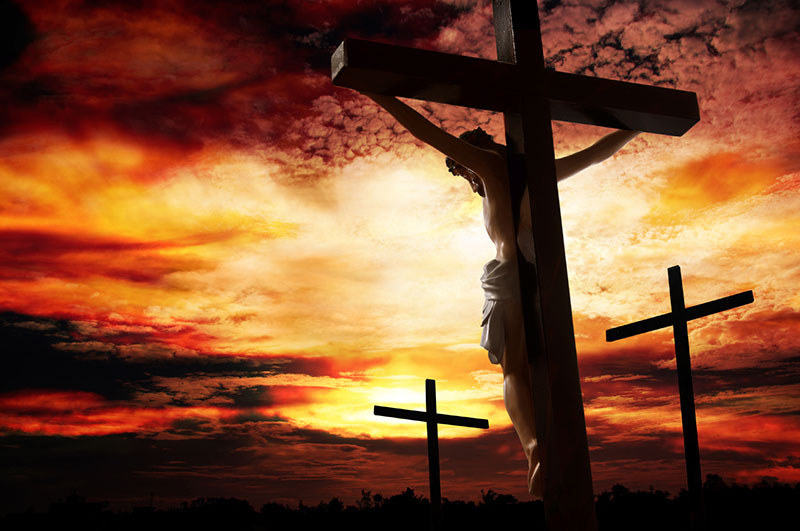
One of the most detailed descriptions of the crucifixion of Jesus is not found in the gospels, but in the Psalms. Remarkably, Psalm 22 gives what appears to be an eye-witness account of Jesus’ crucifixion, yet it was written centuries before the event occurred! No event in David’s life can begin to resemble what we read in Psalm 22, so the narrative is strictly a prophecy of what would happen to the Messiah.

The Psalm begins with the phrase, “My God, my God, why have you forsaken me?” This is the anguished cry that Jesus would utter as he took upon himself the guilt and punishment of all the sins that would ever be committed by all the human beings who would ever exist. As our innocent Savior bore the wrath of God in our place, it seemed as though he had been abandoned by God, but the resurrection would soon prove otherwise.

V.7 of this Psalm depicts those who would mock Jesus as he hung on the cross. The predictions of their insults are amazingly accurate in their wording.

V.15 records that the one being tortured would become extremely thirsty, something that would naturally occur in the process of being crucified. The words of Jesus on the cross, “I’m thirsty”, would point out the fulfillment of this prophecy.

“They pierce my hands and feet”, the Psalmist says in v.16. This is a detailed description of what happens during a crucifixion, even though it would be many years until this form of capital punishment would even be invented.

V.18 says, “They divide my clothes among them and cast lots for my garment.” Right there in the shadow of the cross, the Roman soldiers would greedily vie for the clothing of the One who was in the process of dying to pay for their greed!

The despair of v.1 will be countered by the trust expressed in vv.19-21, where we find such terms as: “strength”, “help”, “deliver”, “rescue” and “save”. God did not save Jesus from the cross. It was Jesus’ mission to seek and save the lost and give his life as a ransom for many. Jesus had to die in order for us to be saved. But God did rescue Jesus from death by resurrecting him on the third day, just as Jesus had predicted.

The Psalm ends with the prediction that the Lord would be praised and served by future generations for his righteousness and his dominion over the nations. Indeed, the church proclaims the gospel message that salvation has been made available through Jesus! The crucified and resurrected Jesus is the only hope for those who are dying in their sins and desperately need a Savior to rescue them! Those who believe in him worship him, serve him and make him known to future generations.

Posted in Christian Living, Communion Meditations | Tagged , , , , , , , | Leave a comment

Face to Face

This time last year, churches suspended in-person worship services for a period of time as the nation tried to stop the spread of COVID-19. Many congregations offered on-line services to give their members an opportunity to worship. This was the best we could do under the circumstances, but it just wasn’t the same as worshiping together. Every aspect of corporate worship—singing, preaching, offering, communion, prayer, etc.–is enhanced by our being together.

I am concerned that many Christians have become satisfied with sitting on their couches on Sunday morning, watching a worship service on an electronic device. As churches have returned to meeting together–with some safety measures in place, of course—some believers have not yet returned to the assembly. Many have legitimate health concerns. But I hope that followers of Jesus will understand the need to be together on the Lord’s Day. There is no good substitute for face to face interaction between those who worship the Lord.

“I have much to write to you, but I do not want to use paper and ink. Instead, I hope to visit you and talk with you face to face, so that our joy may be complete.”—2 John 12.

Posted in Christian Living, Church, Communion Meditations | Tagged , , , , , | 2 Comments