
Thirsty for God

Psalm 42:1-1 says, “As the deer pants for streams of water, so my soul pants for you, my God. My soul thirsts for God, for the living God.”

What is the thirstiest you have ever been? For me, it was a late summer day when the temperature was quite hot. I had been walking up and down hills looking for ginseng, and had not taken much, if any, water with me. I was parched long before I ever got back to my car, where I was able to finally take a much-needed long drink of cold water. You can imagine how satisfying and refreshing that was!

The picture that the psalm writer paints for us is one of a deer that was extremely thirsty. Perhaps it had been running for a long time, trying to avoid a hunter or predator of some kind. Or maybe this thirst was the result of a drought and had been a long time coming.

Sometimes our spiritual thirst comes upon us suddenly. A family emergency, a crisis at work, an accident, an illness or some unexpected moral dilemma comes along and leaves us thirsty, panting for God.

At other times our spiritual thirst slowly develops over a period of time. A bad week turns into a bad season. Bible study seems dry, as if we can’t hear the words of God. Our worship might feel as if it were empty, and our prayers don’t seem to make it past the ceiling. These long spiritual dry spells can leave us thirsty, panting for God.

Continuing in chapter 42, we see how the psalmist deals with his thirst. First, he remembers the times he went to worship in the house of God “…with shouts of joy and praise among the festive throng.” (v.4). Thinking back on a time of worship that you experienced with others can help you remember what it was like to feel the close presence of God.

Then he gives himself a pep talk. V.5 says, “Why, my soul, are you downcast? Why so disturbed within me? Put your hope in God, for I will yet praise him, my Savior and my God.” Sometimes you need to look at the mirror and remind yourself of what you already know—you must keep on praising God and hoping in him, even in times of spiritual drought.

This is followed by another reminder, this time about the constant attention God gives to his people. “By day the Lord directs his love, at night his song is with me—a prayer to the God of my life.” (v.8). Jesus promises to be with us always, to the very end of the age (Matt.28:20). This promise holds true, even in times of spiritual drought.

The world promises to satisfy our thirst, but only God can give us the true spiritual refreshment that we need. Rev.22:17 says, “…Let the one who is thirsty come; and let the one who wishes take the free gift of the water of life.”

Posted in Christian Living, Communion Meditations, Prayer | Tagged , , , , , , | Leave a comment

The End Is Near

At the risk of sounding like one of those cartoon prophets walking on the sidewalk wearing a long robe and holding a sign proclaiming that doomsday is right around the corner, let me say this—the end is near.

How do I know that the end is near? It’s not because of current wars, or the recent earthquake in New York City or the eclipse of a few days ago. These kinds of things have been happening for thousands of years, and Jesus says that “Such things must happen, but the end is still to come.” (Matt.24:6).

I can confidently say that the end is near because the Bible says that it is. 1 Pet.4:7 says, “The end of all things is near…” It couldn’t get much plainer than that, now, can it? The question is, how should we spend our time, given the fact that time is short?

As you read the next few verses, Peter has some suggestions. First, we should be alert and of sober mind so that we may pray. We need to be aware of what is happening around us and keep our minds clear to pray effectively. To be sober-minded means that we must not become distracted.

April has been designated Distracted Driver Awareness month. Accidents are often caused by a moment’s distraction. Drivers may take their eyes off the road for a second to change the radio station or to look for that French fry that got away, never thinking that they might be involved in a costly accident that hurts themselves or someone else.

As we move forward in life, there are many ways that we could become distracted from living for Jesus. We must diligently train our minds to stay focused on the straight and narrow highway. Anything less might result in disaster and cause us to be unable to pray effectively. A distracted mind is unable to pray the way that it should, the way that it must when time is short.

Secondly, Peter says that we need to love one another deeply, and that the way we do this is to forgive one another and to offer hospitality to one another. The Lord teaches us to pray for forgiveness based on how we forgive others. That’s a scary thought! But think of all that the Lord has forgiven you, and now think about those small grudges that we are tempted to hold onto. And hospitality seems to be an old-fashioned concept that is rarely practiced anymore, but the Bible often exhorts us to be hospitable, especially to fellow Christians. To be more loving, we must forgive others when they sin against us and look for opportunities to be hospitable. Since the end is near, let us strive to love each other deeply.

Third, Peter says that we are to serve others faithfully. We sometimes lose sight of the fact that we serve God by serving people. The text says that we can serve with our words or with our deeds. Our words should be spoken as one who speaks the very words of God. Our deeds should be performed with the strength that God provides. So, whether we are speaking or working, let us do it all for the glory of God.

There you have it. The end is near. Therefore, since time is short, let us pray effectively, love deeply and serve powerfully. We only have a limited amount of time to do all we can for Jesus!

Posted in Christian Living, Prayer | Tagged , , , , , , | Leave a comment

The Ministry of Reconciliation

2 Cor.5:11-21 reminds us that we Christians have a ministry of reconciliation. We have been brought back to God through the saving work of the crucified and resurrected Jesus. Now we have the responsibility of trying to persuade others to be reconciled as well, by placing their faith in Jesus, repenting of their sins, confessing that he is Lord and being baptized into Christ for the forgiveness of their sins and to receive the gift of the Holy Spirit.

This Scripture says that Christ’s love compels us to participate in this joint effort to bring people to God by bringing them to Jesus (v.14). We can’t help but want to spread the good news about salvation through Jesus. V.15 is a key verse— “And he died for all, that those who live should no longer live for themselves but for him who died for them and was raised again.”

The love that Jesus showed by dying on the cross in our place is a forceful motivation for us to be actively trying to get other people to respond to his love. The fact that he was raised from the dead proves that he has the authority to forgive us and to commission us to be his representatives to proclaim his message of salvation. V.20 explains the importance of our role in God’s radical plan to save the world through Jesus— “We are therefore Christ’s ambassadors, as though God were making his appeal through us. We implore you on Christ’s behalf: Be reconciled to God.”

We must emphasize the need for all people to be reconciled to God because all people have sinned and fall short of the glory of God (Rom.3:23), and the wages of sin is death (Rom.6:23). Jesus claims to be the only way to be reconciled to God (John 14:6), and his disciples insisted that there is no other name under heaven by which we must be saved (Acts 4:12).

The fact that everyone needs to be reconciled to God and that they cannot be reconciled to God except through Jesus is of the utmost importance. It is critical that we Christians understand the nature of our role as Christ’s ambassadors.

2 Cor.6:1-2 contains this exhortation— “As God’s co-workers we urge you not to receive God’s grace in vain. For he says, ‘In the time of my favor I heard you, and in the day of salvation I helped you.’ I tell you, now is the time of God’s favor, now is the day of salvation.”

The task is urgent, and the time is short! Let us take very seriously this ministry of reconciliation!

Posted in Christian Living, Communion Meditations, Leadership | Tagged , , , , , , | Leave a comment

The Resurrected Jesus

This is the time of year when Christians around the world take special notice of the death and resurrection of our Savior, Jesus Christ. His sacrificial death on the cross paid for the sins of the world. His resurrection from the dead proved that all his claims about himself were true and gave us all hope for eternal life.

The resurrected Jesus was, first of all, perplexing. Many people did not know what to make of the empty tomb. Someone rising from the dead simply did not fit their understanding of reality. They did not think that such a thing was possible. Even his followers were slow to accept the fact of his resurrection, though Jesus had clearly told them ahead of time that it would happen.

Secondly, the resurrection of Jesus was surprising. The women who first arrived at the tomb that first Easter Sunday morning did not expect to find it empty. The two disciples who ran to check out the women’s claims must have also been surprised to find it just as the women had said. Certainly, the opponents of Jesus must have been surprised that their attempts to secure the tomb had failed, and that they could not disprove the claims that Jesus was alive.

Third, the resurrection of Jesus was divisive. It forced people to make decisions. Some chose to deny the resurrection and try to cover it up with lies and deception. Others decided to embrace the truth that Jesus was indeed alive. You can’t sit on the fence when it comes to Jesus. You must choose sides.

Finally, the resurrection of Jesus was inspiring and empowering to those who chose to believe in him. The lives of his followers were forever changed. Their boldness was seen in both their words and their actions as they preached the truth and bravely stood against all opposition. This band of believers, empowered by the Holy Spirit, continued the ministry of Jesus and fueled a movement that changed the world. This movement is on-going today, and it will continue to gain followers until the resurrected Jesus returns for his church!

I hope that you have responded properly to the resurrected Jesus and that you will continue to follow him, witnessing and serving in his power.

Posted in Christian Living, Church, Communion Meditations | Tagged , , , , | Leave a comment

Choosing the Son

After Jesus was arrested, he was taken to the governor, Pilate. After examining Jesus, Pilate determined that he had done no wrong, and wanted to set Jesus free.

There was a custom to release a prisoner at the Passover festival, so Pilate suggested that Jesus be set free. However, the Jewish leaders stirred up the crowd to ask that Pilate release a notorious criminal named Barabbas instead.

Ironically, the name “Barabbas” means “son of the father”. So, the crowd was faced with the choice between the true Son of the Father, Jesus, and a poor substitute for the real thing.

Sadly, the crowd chose the poor substitute instead of Jesus. Barabbas was set free, and Jesus was sent to the cross where he would die for the sins of the world.

We are still faced with similar choices today. Every day people choose a poor substitute for the real thing rather than choosing the true Son of God. Be careful what kind of decisions you make!

Posted in Christian Living, Communion Meditations | Tagged , , , , , , , | Leave a comment

When Jesus Is Lifted Up

Numbers 21 records an interesting part of the Israelites’ journey through the wilderness to the promised land. It seems that they grew impatient and started grumbling against God. Well, God doesn’t like to hear people grumble, especially against him, so he sent venomous snakes that bit the people, and many of them died.

At this point the people came to Moses, admitted their sin, and asked him to pray that the Lord would take the snakes away. So, Moses prayed for the people.

Then the Lord told Moses to make a snake and put it up on a pole. Whoever would get bitten could then come and look at it and live. So, Moses made a bronze snake and put it up on a pole. Then when anyone was bitten by a snake and looked at the bronze snake, they lived.

There are some lessons to be learned from this incident.

First, God doesn’t like complaining. The Bible warns us about this time after time, yet many Christians seem to make grumbling their hobby! Do your best not to grumble and complain, because God reserves the right to punish those who do so.

A second lesson to learn is the need to repent. Once we realize that we have sinned, we need to confess that sin to God and repent. Jesus says not once, but twice, in Luke 13:1-5 that those who refuse to repent will perish.

Third, we need to understand that the Lord is willing to offer forgiveness for those who do repent. Just as he made provisions for the Israelites in Numbers 21, God made it possible for everyone in the world to be forgiven when he sent his Son Jesus to die for the sins of the world.

Jesus refers to this episode when he says in John 3:14-15, “Just as Moses lifted up the snake in the wilderness, so the Son of Man must be lifted up, that everyone who believes may have eternal life in him.” Here Jesus is predicting the sacrificial death that he would die on the cross to pay for the sins of mankind.

In a way, we are all snakebit, because, as Rom.3:23 says, “For all have sinned and fall short of the glory of God.” But when we place our trust in the crucified Jesus, God takes away our sins and removes from us the penalty of those sins. Rom.6:23 says, “For the wages of sin is death, but the gift of God is eternal life in Christ Jesus our Lord.”

Posted in Christian Living, Communion Meditations, Uncategorized | Tagged , , , , , , , | Leave a comment

A.C.T.S. of Prayer

A.C.T.S. is an acronym that many people have used over the years as an outline for their prayers. There are several variations of this plan that focuses on some of the fundamentals of prayer. I have taken one of them and adapted it just a little bit. Perhaps it will be of some benefit to you.

 “A” is for “adoration”. A good way to begin a prayer is with worship. There are many prayers in Scripture that recognize God’s awesome holiness. God alone is worthy of such adoration. Psalm 95:6-7 urges us, “Come, let us bow down in worship, let us kneel before the Lord our Maker; for he is our God and we are the people of his pasture, the flock under his care.” This verse stresses how we should approach God, by humbly bowing before him and recognizing his Lordship of our lives. Scripture says that he is worthy to be worshiped for who he is and what he does. So, a good place to start our prayer is with adoration.

“C” stands for “confession”. Every time we pray is an opportunity to admit our sins and shortcomings to God. Psalm 32:5 says, “Then I acknowledged my sin to you and did not cover up my iniquity. I said, ‘I will confess my transgressions to the Lord.’ And you forgave the guilt of my sin.” The New Testament also instructs us to practice confession in our prayers. 1 John 1:8-10 says, “If we claim to be without sin, we deceive ourselves and the truth is not in us. If we confess our sins, he is faithful and just and will forgive us our sins and purify us from all unrighteousness. If we claim we have not sinned, we make him out to be a liar and his word is not in us.” We can’t hide our sins from God. He knows what we have done wrong. The best approach is to confess our sins when we pray to him.

“T” is for “thanksgiving”. Gratefulness is a key ingredient to our prayers. We should be extremely thankful for all the many blessings that God showers on us constantly. Phil.4: 6 implores us, “Do not be anxious about anything, but in every situation, by prayer and petition, with thanksgiving, present your requests to God.” Too often we start asking God for things before we have properly thanked him for the things he has already given us! Let’s make sure we take some time to be grateful in our daily prayers.

“S” stands for “supplication”. This is the part of prayer where we ask God for his blessings, both physical and spiritual. I refer you once again to Phil.4:6, which says that after you have expressed your thanks, then you can “present your requests to God.” We should never cease to be amazed that the God who created the universe is willing not only to listen to our prayers, but also to respond to the requests that we make for ourselves and for others.

I hope that this exercise in prayer is beneficial to you and that it helps you to deepen your relationship with God.

Posted in Christian Living, Prayer | Tagged , , , , , , , | Leave a comment

Water

My wife and I love the water. We enjoy watching boats go up and down the Ohio River, which flows about 400 yards from our house. Some of our favorite vacations, such as cruises, involve water.

One trip took us to Niagara Falls. We stayed on the Canadian side of the falls. It was our first trip north of the border.

We went on several excursions in our 3 days at Niagara. One was a cable car ride over the whirlpool downstream from the falls. Another was a walk along the whitewater rapids. We also walked behind the falls to get a different perspective. One of the most memorable experiences of the whole vacation was our ride on the Maid of the Mist, a boat that takes passengers so close to the falls that it feels like you are in a pouring rain.

At night the falls are illuminated with a fantastic display of lights, including various colors that change from time to time.

I suppose the most amazing aspect of Niagara Falls is the sheer power of the water as it roars over the cliff to its destination below. People flock to view its magnificence, and they take pictures to record their experience for later enjoyment.

Gazing at the falls reminded me of how significant water is in the Bible. In the very beginning, when God created the heavens and the earth, “the Spirit of God was hovering over the waters.” (Gen.1:1-2). It was through the miraculously parted waters of the Red Sea that God enabled his people to escape slavery in Egypt and enter into the Promised Land (Ex.14). David writes that our Good Shepherd leads us beside the still waters (Ps.23). Isaiah 55:1 urges us—“Come, all you who are thirsty, come to the waters…”

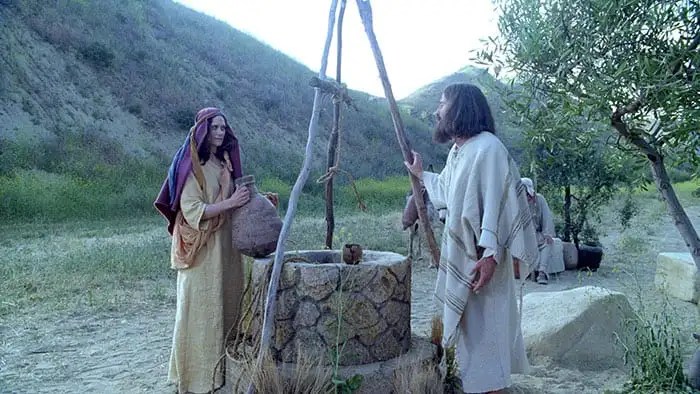
In the New Testament, we see that several of Jesus’ miracles involve water: turning the water into wine, walking on water and calming the storm, to name a few. Jesus compares the spiritual blessings he offers to water. “Jesus answered, “everyone who drinks this water will be thirsty again, but whoever drinks the water I give him will never thirst. Indeed, the water I give him will become in him a spring of water welling up to eternal life.” (Jn.4:13-14). In fact, Jesus teaches that in order to enter his kingdom we must be “born of water and the Spirit” (Jn.3:5).

People who believed in the message of Jesus and his apostles flocked to the water, where they repented and were baptized for the forgiveness of their sins. About 3,000 were added to the church after Peter preached his sermon on the Day of Pentecost (Acts 2:38-41). People continued to be buried with Jesus through baptism and were raised to live a new life (Rom.6:4). The process continues today for anyone who wants to receive Jesus as his or her Savior.

Are you thirsty? Then come to the water!

Posted in Christian Living | Tagged , , , , , , | Leave a comment

Mr. Irrelevant

Brock Purdy

The San Francisco 49ers used the last pick of the 2022 NFL draft to pick quarterback Brock Purdy. The last player chosen in the draft has been labelled “Mr. Irrelevant”, because few players chosen last ever make a significant impact in the league.

However, Purdy has beaten the odds. He took over the starting quarterback job because of injuries last season and has done a great job, leading the 49ers to a berth in this year’s Super Bowl.

That’s quite an unlikely story, yet that’s what happened.

In a similar fashion, God uses unlikely people like you and me to be instrumental in his radical plan to save the world through Jesus. 1 Cor.1:26-27 says, “Brothers and sisters, think of what you were when you were called. Not many of you were wise by human standards; not many were influential; not many were of noble birth. But God chose the foolish things of the world to shame the wise; God chose the weak things of the world to shame the strong.”

Whatever we might think about ourselves, we are certainly not irrelevant!

Posted in Christian Living, Communion Meditations, Current Events, Leadership, Sports | Tagged , , , , | Leave a comment

Miracles

People often use the word “miracle” inappropriately. Sometimes people talk about “the miracle of birth”. While childbirth is an amazing and wonderful event, it is hardly miraculous. It is a perfectly natural event. I once heard someone say that every time we travel in a car and arrive safely at our destination it is a miracle. Not hardly!

Before we go any farther, let’s try to define the word. A miracle is an action that goes against the laws of nature and creates or enhances faith in God. Miracles are rare events that don’t happen every day. They cannot happen naturally. A miracle is when God intervenes during the course of human events and does something that is otherwise impossible. The intended result of a miracle is to either cause people to start believing in God, or to increase the faith that they already have.

Sometimes we must distinguish between a miracle and the daily providential care of God. For example, suppose that a bridge falls immediately after you cross it. Was that a miracle? No, bridges sometimes collapse because of the law of gravity. Now if a bridge that had collapsed reassembled itself right before you needed to cross it, that would be a miracle!

We see miracles in the Old Testament: The Red Sea parted, an axe head floated to the top of the water, a donkey talked, the dead were raised, and fire came down from heaven to burn up a water-soaked sacrifice.

More often we think about the miracles Jesus performed in the New Testament: Changing water to wine, walking on water, calming the storm, exorcisms, various healings, and raising the dead.

There are several purposes for the miracles of Jesus: To prove his identity, to demonstrate his mission to save, to draw a crowd, to show compassion, to reward faithfulness, to fulfill prophecy, and to display the glory of God.

Notice that Jesus enabled his disciples to perform miracles as they went out preaching the good news of the kingdom. This would ensure that their message would be heeded by those who were truly seeking God.

Notice also that the apostles performed miracles after the crucified and resurrected Jesus ascended into heaven. This was to convey the idea that the church would continue the ministry of Jesus here on earth.

The primary purpose of Jesus’ miracles was to demonstrate God’s salvation. Miracles give us a brief look at heaven, where there will be no more crying, suffering, death or pain. When Jesus performed a miracle, he brought a little bit of heaven to earth for a moment.

(For this article, I relied heavily on a lecture given by Mark Scott.)

Posted in Christian Living | Tagged , , , , , , | Leave a comment