Millions of Jeopardy fans are mourning the loss of the television show’s beloved long-time host, Alex Trebek, who passed away a few days ago after a valiant battle against pancreatic cancer. Trebek seemed to have been born for the role of host of the popular TV game show. His calm, pleasant demeanor, his smooth voice and his obvious love of knowledge all contributed to his great success in hosting the show for so many years.
One of Alex Trebek’s finest qualities was the genuine empathy he had for the contestants. He rooted for all of them to do well. Alex sympathized with them when they did not come up with the proper response, and he was obviously pleased when they were correct, especially when it enabled them to win a lot of money. His caring nature endeared him to the millions of fans who watched him over the years.
Empathy is a quality that we all should try to cultivate in our lives. The more that people understand that we truly care about them, the more likely we are to be able to influence them in a positive way that will either lead them to Jesus or help them to grow in their faith.
“Rejoice with those who rejoice; mourn with those who mourn.”—Romans 12:15.
Today is Veterans Day, and citizens of the United States will spend time reflecting on the sacrifices made by many men and women over the years; sacrifices that served to gain and maintain the freedoms we enjoy in our great nation. While the current pandemic will curtail many of the gatherings and celebrations that had been planned, nothing will diminish our appreciation for those who have unselfishly sacrificed so much for their fellow countrymen.
Let’s spend some time today giving thanks for our veterans and saying prayers for our men and women in uniform and their families, wherever they may be.
“Greater love has no one than this: to lay down one’s life for one’s friends.”—John 15:13.
I have always liked the message that I saw on a T-shirt years ago—“Be Patient with Me! God Is Not Finished with Me Yet!” We Christians are indeed all works in progress. We never will reach perfection, therefore there is the need to be patient with one another.
However, I have recently had a new thought about that message. Could it be that we use the perfectly respectable request for patience as an excuse for not growing in our faith? Is it possible that we might prefer continually asking for forgiveness over exercising the discipline required to make much-needed changes in our lives?
Maybe it’s not true, but I thought it was worth asking.
“Be diligent in these matters; give yourself wholly to them, so that everyone may see your progress.”—1 Tim.4:15.
My wife and I are finally getting around to looking through the numerous boxes of things that we thought were so important that we just had to move them here when we settled into this house nearly five years ago.
Some of the things we have found are valuable to us, if not to anyone else. Many of the books, papers, pictures and little odds and ends bring back precious memories of good times spent with family and friends.
On the other hand, we have found some things that not only have absolutely no value to us now, we have to wonder what we were thinking when we acquired these objects in the first place! I can’t for the life of me figure out what purpose some of this junk was supposed to serve!
As we take inventory of our lives, it is important that we consider what our purpose is. After all, none of us wants to waste our life. Most people have a strong desire to live a life that is useful and filled with meaning. Colossians 1 talks about how Jesus is the supreme Son of God, and v.16 reminds us that all things, including us, “…have been created through him and for him.” We must always remember that our reason for existing is to live for God—this is the purpose that we must serve.
In Acts 13, we find Paul preaching a sermon about God’s plan to save mankind through Jesus. As an example of one who was a part of this plan, Paul talks about David. V.22 says, “…God testified concerning him: ‘I have found David son of Jesse, a man after my own heart; he will do everything I want him to do.’” Later in that chapter, Paul says this about David’s death—“Now when David had served God’s purpose in his own generation, he fell asleep…” (v.36).
David showed us how to serve our purpose in life, and we would do well to follow his example.
David was a man after God’s own heart. By no means does this mean that David was perfect! David sinned greatly! However, he repented of his sin, and the main focus of his life was to live for God. He was a man of prayer and worship. The psalms that he wrote show us a picture of a man whose utmost desire was to please his Creator and Redeemer. We, too, must strive to align our hearts with the heart of God. The things that please him should please us. The things that make God sad should make us sad also. Our lifelong ambition should be to become more and more a person after God’s own heart.
How do we do that? Through obedience. God said that David “…will do everything I want him to do.” (v.22). The Bible continually stresses the need to obey God. The blessings of obedience are made clear, as are the curses of disobedience. Jesus says, “If you love me, keep my commands.”
It is a pure and simple truth that in order to be a person after God’s own heart, you have to do what he says. We must obey God at all times. We must obey him when it is inconvenient. We must obey him when it is very difficult. We must obey him when it is costly to do so. We must obey him even if it causes people to misunderstand us. We must obey him when people oppose us. We must obey him when it seems like it won’t make any difference. Those who follow Jesus must develop a lifestyle of doing what God says to do, over and over again.
They say that God doesn’t make any junk. I think that’s true. We are all made in his image. However, some people choose to end up on the junk heap of life by their continual disregard for God’s commands.
Don’t waste your life! Do your best every day to serve your purpose by obeying what God has called you to do in this generation.
I just read an interesting analogy about maintaining standards, and I’d like to share it with you. It was a social media post that used an example from the sports world.
In baseball, home plate is 17 inches wide. In order to get a strike called on the batter, the pitcher must throw the ball over the plate. What if the pitcher doesn’t like that standard? Does he demand that we start to use a larger home plate? If so, then how large? Would 18 inches be big enough? What about 20? Some might lobby for 30!
I think it is safe to say that baseball will not change the size of home plate. Pitchers will have to accept the standard that was set a long time ago and has been maintained over many years.
God has set certain moral standards for mankind. We are not to steal, kill, or lie, and so on. Not only are there negative behaviors to avoid, there are also positive behaviors to adopt. We must love, forgive, serve others and worship God, for example.
The world does not agree with God’s standards. However, those standards will not change. We must not demand that home plate be widened in any way!
“Do not love the world or anything in the world. If anyone loves the world, love for the Father is not in them. For everything in the world—the lust of the flesh, the lust of the eyes, and the pride of life—comes not from the Father but from the world. The world and its desires pass away, but whoever does the will of God lives forever.”—1 John 2:15-17.
One of my favorite episodes in the life of Jesus is recorded in chapter two of Mark’s gospel. There we read the account of how Jesus heals and forgives a paralyzed man who was carried to Jesus by four of his friends. Notice what v.5 says—“When Jesus saw their faith, he said to the paralyzed man, ‘Son, your sins are forgiven.’”
Jesus actually saw their faith. Their faith was not some vague notion that they held in their minds. Nor was it a warm feeling they had in their hearts. Their faith was visible. It was seen in their actions. They believed that Jesus could heal their friend, therefore they did something about it—they brought him to Jesus.
Faith must be visible. It must be expressed in actions that can be seen. James hammers this point home in James 2—“In the same way, faith by itself, if it is not accompanied by action, is dead.” (v.17). “You see that a person is considered righteous by what they do and not by faith alone.” (v.24). “As the body without the spirit is dead, so faith without deeds is dead.” (v.26).
We must not be deluded into a false sense of security when it comes to our faith. Our faith cannot be hidden; it must be visible!
And one excellent way that we can show our faith is the way we see it expressed in Mark 2—by bringing somebody to Jesus!
Today is the day that many have been anxiously anticipating (dreading?) for some time—Election Day 2020. Many voters exercised their right early this year. The rest are making the trek to the polls today to decide who will be our next president. The rhetoric has been especially heated this campaign. The nation seems to be equally divided between the two candidates. Many people on each side are deeply concerned about what will happen if the other side wins. Will the results be contested? Will there be violence? Will the nation plunge into a period of darkness such as we have not seen in some time? These questions, and others, have caused many people to become extremely anxious.
I don’t claim to have all the answers, but I do know a few things. I know that God will still be on his throne no matter who wins. I know that we Christians will have a lot of work to do no matter who wins. I know that we are still commanded to pray for our leaders no matter who wins. I know that believers are called upon to obey the government—unless asked to disobey God—no matter who wins. And I know that we Christians are still saved and living in his kingdom…no matter who wins!
“I have told you these things, so that in me you may have peace. In this world you will have trouble. But take heart! I have overcome the world.”—John 16:33.
Today is Halloween, and I am not so sure how to celebrate. Like many of you, I have been wearing a mask and eating candy since March!
With trick-or-treating being limited because of COVID-19 concerns, we probably won’t be seeing as many scary costumes this year. Perhaps more people will seek their thrills from watching their favorite horror movies. Many people enjoy being scared.
However, I have heard people say that they don’t like to read Revelation because it’s too scary. Visions of supernatural demonic creatures, unholy oppressive governments and various disasters and calamities befalling mankind may indeed keep some people awake at night.
But I would suggest that the scariest parts of Revelation are not the sections that describe catastrophic events of the end times. I think the scariest parts of the book are those that point out the fate of those who oppose God by rejecting Jesus.
That, my friends, is what you should be concerned about.
“Blessed is the one who reads aloud the words of this prophecy, and blessed are those who hear it and take to heart what is written in it, because the time is near.”—Revelation 1:3.
I sometimes have difficulty recognizing faces, especially of people I do not know particularly well. This pandemic has not helped my situation at all. Several times I have seen someone I think I know out in public and have opened the conversation with, “Hey, _________! Is that you behind that mask?”
I also sometimes have difficulty hearing people talk, especially if there is a lot of background noise. Again, the masks that we need to wear to protect others make it harder for me to understand what is being said. More than once I have been in a conversation where I have asked others to please speak loudly, clearly and distinctly so that I can understand them.
It’s good to know that God has no problem recognizing or understanding those who belong to him. He knows everything about us and he loves us anyway. No matter to what degree we might feel unknown by other people, our heavenly Father will always know us intimately, and that should give us great comfort.
“Are not two sparrows sold for a penny? Yet not one of them will fall to the ground outside your Father’s care. And even the very hairs of your head are all numbered. So don’t be afraid; you are worth more than many sparrows.”—Matthew 10:29-31.
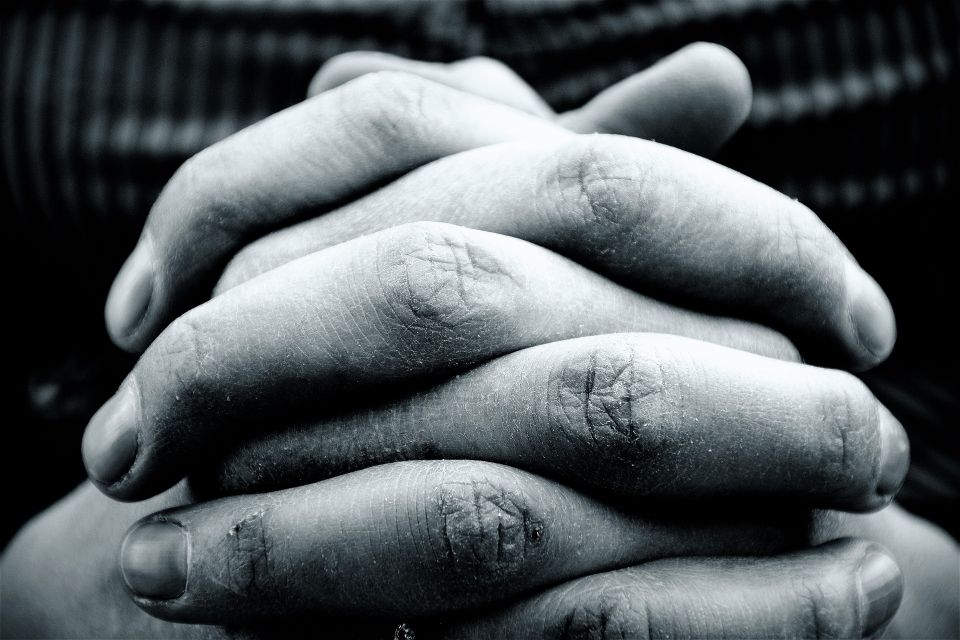
We usually feel quite safe when we are praying, and with good reason. When Christians pray we are having a conversation with our heavenly Father who loves us more than we could ever understand. When we pray we feel snug and secure in the arms of the One who created us and, through Jesus, has redeemed us. It is the most natural thing in the world for believers to feel safe when we are praying.
However, sometimes it is a dangerous thing to pray. The Bible records several such prayers, one of which we find in Psalm 139:23-24—“Search me, God, and know my heart; test me and know my anxious thoughts. See if there is any offensive way in me, and lead me in the way everlasting.”
To invite the all-knowing God to have full access to what is inside of us is a dangerous thing to do. Our hearts and minds are sometimes inhabited by thoughts, attitudes and desires that are downright sinful. To welcome a perfectly holy God to give careful inspection to our imperfect inner being puts us in a precarious situation! We cannot hope to hide anything from God, not even our best-kept dark secrets that no human being even suspects about us.
The prayer continues by asking God to see if there is any offensive way in us. It is implied that if (more likely when!) God finds such offenses that he will make them known to us. He will point out to us our thoughts, attitudes, words and actions that betray the sin within us, sins that include: greed, lust, an unwillingness to forgive, gossip, laziness, hatred, a lack of passion for the things that God is passionate about and various other offensive ways. When God reminds us of such sins within us, it causes us great pain to think that Jesus died to pay for these offenses, but we have not been able to put these sins behind us.
However, the prayer does not leave us in such a sad state of woe. The next request is that God lead us in a better direction, “in the way everlasting.” We don’t ask God to reveal our sins to us so that we can merely feel bad about them. We ask him to point us in a heavenly direction. Sometimes that means we must take better control of our thoughts and attitudes. It means that we must become better in tune with the Holy Spirit and follow his leading. It causes us to apologize when we have wronged someone, to gain better control of our speech, or to give up a questionable activity that hampers our witness. This invitation for God to lead us opens up the possibility for him to take us in a completely different direction.
That’s why this prayer is a dangerous one. Safe prayers offer no possibility for our comfortable lives to be disrupted in any way. Safe prayers invite no inspection from God. They expect no correction, no rebuke and certainly no interruption of our carefully and selfishly planned life.
I think that God hears more than enough safe prayers. Let’s pray some dangerous prayers for a change!










 Jesustrek